What's the real difference between traditional stucco and synthetic stucco (EIFS)?
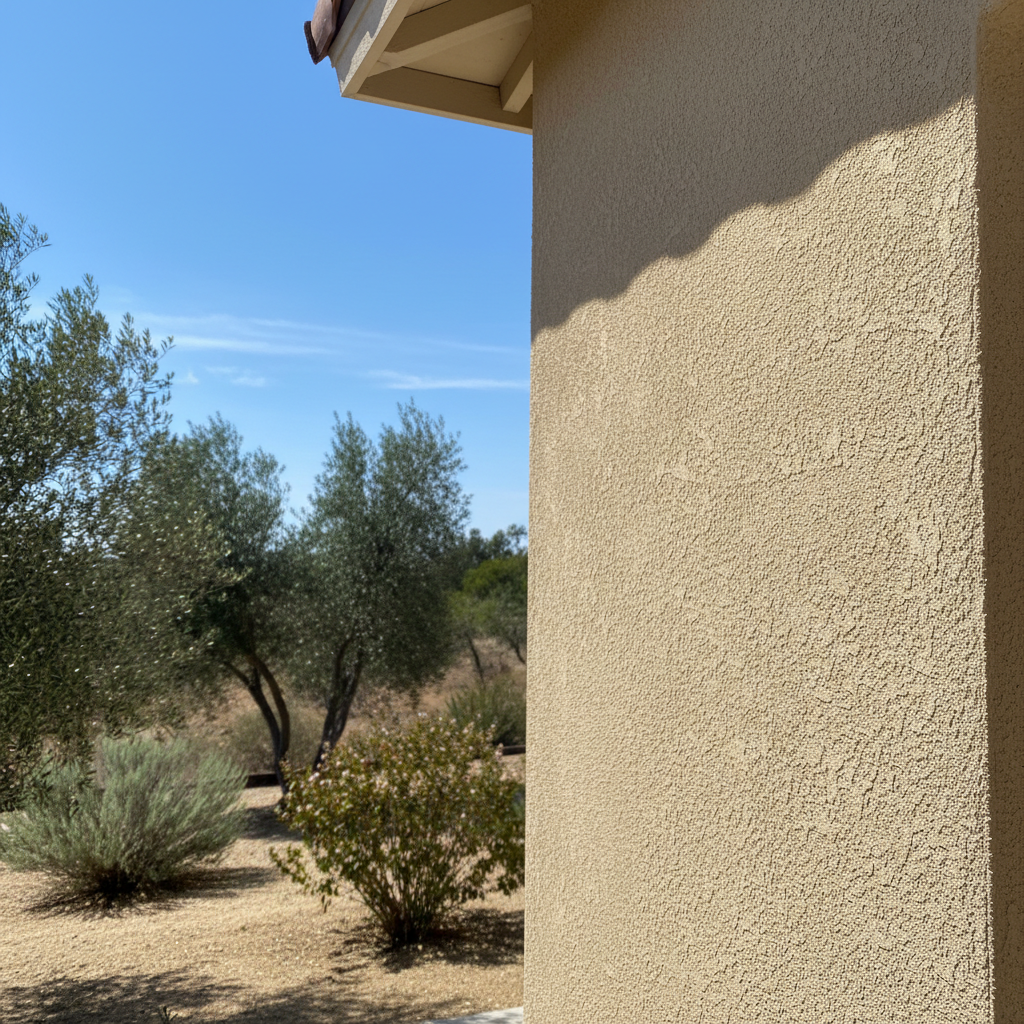
Alright, let's clear this up because it's a big one. When we talk about 'traditional stucco,' we're usually talking about a cement-based product. It's a mix of Portland cement, sand, lime, and water. We apply it in multiple coats over a wire lath, and it dries hard, creating a really durable, breathable, and fire-resistant finish. It's been around for centuries, and you see it all over Riverside, especially on those older Spanish-style homes. It's tough, it handles our dry heat well, and it lets moisture escape.
Synthetic stucco, or EIFS (Exterior Insulation and Finish Systems), is a whole different animal. It's basically layers of insulation board, usually expanded polystyrene (that's the foam board), covered with a fiberglass mesh, and then a thin, acrylic finish coat. It's lighter, offers better insulation, and can be more flexible, which means fewer cracks from minor building shifts. But here's the catch: EIFS is a 'barrier' system. If water gets behind it – say, through a poorly sealed window or roof flashing – it can get trapped, and that's when you start seeing problems like rot and mold. Traditional stucco, being breathable, is more forgiving if a little moisture gets in. For our climate, both can work, but the installation details for EIFS are absolutely critical to prevent future headaches. You can't cut corners with EIFS.
How long does a new stucco installation typically take?
That's a 'how long is a piece of string?' kind of question, but I can give you a good idea. For an average-sized single-family home, say 1,500 to 2,500 square feet, you're usually looking at anywhere from two to four weeks from start to finish. That's assuming good weather and a crew that knows what they're doing. There are a lot of steps involved: prep work, applying the lath, then multiple coats of stucco, each needing time to cure properly. You can't rush the drying process, especially with traditional stucco; it needs to set up right to be strong. If we're doing a full tear-off and re-stucco, that adds time because we have to remove the old stuff and get the substrate ready. If it's a smaller repair or a simple re-dash over existing stucco, it'll be quicker, maybe a week or less. But for a full new installation, plan on a few weeks of activity around your house.
What kind of maintenance does new stucco need?
One of the best things about stucco is how low-maintenance it is, especially compared to siding or wood. For the most part, you just need to keep it clean. A good wash with a garden hose and a soft brush once a year or so will usually do the trick to get rid of dirt, dust, and any cobwebs. If you get some stubborn stains, a mild detergent and water can help. Just don't use a high-pressure washer too close to the surface, especially on synthetic stucco, because you can damage it. You also want to keep an eye out for cracks. Small hairline cracks are pretty normal with traditional stucco as the house settles and expands/contracts with our Riverside temperatures, but anything wider than a credit card, or cracks that are growing, should be looked at. Make sure your gutters are clean and directing water away from the walls, and keep an eye on your landscaping so plants aren't growing directly against the stucco, trapping moisture.
Will new stucco crack? Is that normal?
Yes, it will. And yes, it's mostly normal, especially with traditional cement stucco. Think about it: it's a rigid material, and your house is constantly moving, even if you don't feel it. We get pretty big temperature swings here in Riverside, from hot summer days to cooler winter nights, and materials expand and contract. The ground can shift a bit, too. So, small hairline cracks are almost inevitable over time. They're usually just surface-level and don't affect the integrity of the wall. We call them 'shrinkage cracks' or 'stress cracks.' What you need to watch out for are larger cracks, cracks that run horizontally or diagonally across large sections, or cracks that are getting wider. Those can indicate a structural issue or a problem with the stucco application itself, and they should be inspected. A good installation with proper expansion joints helps minimize cracking, but you'll still see some minor ones.
Can I change the color of my stucco later if I don't like it?
Absolutely. You've got a couple of options if you want to change the color down the road. The most common way is to paint it. You'd use a high-quality elastomeric paint specifically designed for stucco. This type of paint is flexible, so it can bridge small hairline cracks and protect the stucco underneath. It's a great way to refresh the look of your home without a full re-stucco. The other option, if you want a more textured or deeper color change, is to apply a new finish coat, often called a 'color coat' or 're-dashing.' This involves applying a thin layer of new stucco material, pre-colored, right over your existing stucco. It's more involved than painting but can give you a brand-new texture and a really vibrant, long-lasting color. It's a good choice if your existing finish is looking tired or has a lot of minor imperfections you want to hide. Both are solid options, it just depends on your budget and the look you're going for.
What's the deal with weep screeds and why are they important?
Okay, this is one of those details that a lot of homeowners don't think about, but it's super important for the longevity of your stucco, especially with our occasional heavy rains and the way our foundations are built here. A weep screed is a metal flashing, usually galvanized steel or vinyl, that we install at the very bottom edge of your stucco, just above the foundation. It's got a small, angled flange that creates a gap between the stucco and the foundation. Its job is twofold: first, it provides a clean, straight edge for the stucco to terminate, creating a nice finish. Second, and most importantly, it allows any moisture that gets behind the stucco – from rain, condensation, or even just humidity – to drain out. It 'weeps' the water away from your wall system and foundation. Without a proper weep screed, water can get trapped behind the stucco, leading to rot, mold, and damage to your framing. It's a critical component for proper drainage and preventing moisture problems. If you're getting new stucco from Riverside Stucco & Plastering, you can bet we're putting in a proper weep screed.